Questions to Ask Yourself Before Contacting a Contract Machining Company

M&M Automatic Screw Machine

Outsourced contract machining allows companies around the world to save time, money and resources every year. However, in order to speed up the manufacturing quoting process and get your parts made within the time frame and budget that you need, there are a few questions you should have answered internally first.

Questions to Answer About Your Contract Machining Needs:

  • What is my budget to produce this part?
  • What is my timeline to have the part in my hands?
  • How many parts do I need?
  • How often will I need my parts run?
  • What material(s) will best suit my part? (Not sure? We can help you figure it out!)
  • What is the possibility that my part design will change over time?

Having these questions answered ahead of time can help you speed up the quoting process as well as the manufacturing process, saving both you and your manufacturing company in the long run.

What are the Different Types of Manufacturing Entities: Toll, Contract, Full-Fledged

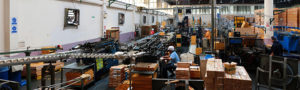
M&M Automatic Manufacturing Floor

When you outsource your contract manufacturing, you typically are faced with determining which one of three types of manufacturing entities will fit your manufacturing needs. Depending on your circumstances and project requirements, you’ll want to evaluate if you’ll need a toll manufacturer, contract manufacturer or full-fledged manufacturer.

Toll Manufacturer

Materials, goods, inventory and selling risks are assumed by the organization that hires a toll manufacturing company (you in this case). Under this type of situation, the toll manufacturer provides the plant, machinery and labor force to manufacture parts, and you must provide all materials and goods necessary for manufacturing. You also would hold ownership of all intangible assets such as patents and designs and assumes all selling risks.

You can count on paying a toll manufacturer on a routine basis.

Contract Manufacturer

This type of manufacturer is the body that owns the plant and machinery and provides the labor to operate the machinery – similar to a toll manufacturer. You would have access to the company’s resources (plant, machinery and machinists) to make your parts and components, and you ultimately assume the risk of selling the goods. Similarly, a contract manufacturer would also be paid on a routine basis.

What makes contract manufacturers different from toll manufacturers is that they source and supply the materials necessary to manufacture the parts.

Full-Fledged Manufacturer

A full-fledge manufacturer is the most involved of the three types. This company is responsible for providing the space, machinery and team to manufacture the parts, as well as, all materials and goods necessary for production. Ultimately, this type of manufacturer assumes all risks associated with selling the products and has rights to intangible assets such as designs and patents.

How to Speed up Manufacturing Processes When Outsourcing

M&M Automatic Machine Sparks

The manufacturing industry relies heavily on deadlines both from a customer perspective as well as an outsourced manufacturing company perspective. Here are some tips we’ve come up with over the years to help you speed up the manufacturing process so you can meet your deadlines more efficiently and get your products into your customer’s hands faster.

Tips for Speeding up the Manufacturing Process

Maximize Your RFQ Information

The more information that you disclose when you request a quote from a manufacturing company, the less time the company has to spend asking questions and you answering questions to get all the necessary information to produce an accurate quote.

Avoid Solidworks Document Formats

More often than not, when a design is submitted from Solidworks, it lacks the proper dimensions to quote the project. When you submit your RFQ, make sure you include your dimensions in your design, otherwise the manufacturing company will spend more time getting that information from you further delaying the quoting and manufacturing process.

Communicate Timelines

Simple, but important – clearly communicating your timeline is crucial to getting your parts into your hands when you need them. Whether you’re in need of an expedited timeline or not, when you’re up-front and clear about when you need your parts, the manufacturing company can readily meet and often exceed those deadlines.

Supply Materials

Ordering materials to use in the manufacturing process is a normal, daily activity for outsourced manufacturing companies, but one that can take a lot of time. If you are able supply the materials you would like to use for your parts, it could shave a lot of preliminary, set-up time off speeding up your manufacturing.

If you aren’t sure what materials to use, this article might be helpful »

Provide the Right Gauges

Every part is unique and often requires speciality gauges in order to ensure that the parts are exact to specifications. Instead of relying on the manufacturing company to order the necessary gauges to test your parts, provide your own gauges from the start to further speed up the process.

From supplying the right information in your RFQ to providing the materials you need to manufacture your parts with, there are a variety of ways you can help expedite the manufacturing process to get your parts into your hands quicker.
5 Ways to Cut Manufacturing Costs For Your Custom Machined Parts

M&M Automatic Custom Parts

When you outsource your custom parts to be manufactured, you’ll typically fall into one of two categories – those that ultimately save money on equipment, parts, and labor and get a better return on their investment or those that end up spending more than they should be, capping their profit. If you find yourself in the latter category and wanting to cut costs while still maintaining the integrity of your parts, these five manufacturing cost cutting techniques are for you.

Reduce Small Features

Adding small divots, cuts and holes are very difficult to mill, adding costs for time and labor. Eliminate any unnecessary elements to your parts in order to reduce the milling time that’s required and reduce your overall manufacturing costs.

Change Your Materials

Simply changing the material that you use to create your custom manufactured part can save you tremendously in the long run. For example, instead of using stainless steel, switch out your machining material with a durable plastic material.

Utilize Blanket Purchases

By agreeing to a blanket purchase (pre-arranged order of manufacturing and delivery on multiple dates over a period of time), most contract manufacturing companies will offer their services at a lower price and they’ll make sure that you’re a top priority when it comes time to manufacture your parts.

Limit Unneeded Depth & Holes

The more holes and the deeper those holes have to be drilled, the more time and money the parts require. Try limiting to only what you need to create the best and most cost-efficient part.

Outsource the Job

If you’re still manufacturing your parts internally, that may be consuming more of your time, energy and resources than it should be. From owning and servicing the manufacturing machines, to hiring certified machinists to operate the machines, the costs associated with running parts in-house may be more than you bargained for. When you outsource your parts to a qualified manufacturing company, you can save money on manufacturing the parts all together and be able to focus more on other areas of your business.

5 Top Signs of a Successful & Quality Contract Manufacturing Company

It’s important to know what to look for when researching contract manufacturing companies to handle your outsourced manufacturing needs in order to ensure that you’ll get the best possible quality and care. Here are 5 fundamental signs that a contract manufacturing company is worth your business’ time, money and resources.

Customer-Centric Approach

Every good contract manufacturing company is purposeful at placing the focus and importance on its customers.  This should be reflective in how they answer their phones or how they speak with people in person as well as on their websites and through testimonials and reviews from past customers. Every good company is focused on how they can better serve you as a customer.

First Class Machinists & Staff

Apart from the actual machinery, a high quality contract manufacturing company should be equipped with top notch contract machinists and staff. From the front desk and customer service team to the machinists running the parts, every part of the team should be trained, equipped and visibly on top of their game from the time you begin conversations with them through the process of running the parts.

Expert Educators

What truly sets one contract manufacturing company apart from another is the emphasis on education. A company that places a lot of importance, time and resources on educating their customers and prospective customers is more readily viewed as a reliable, thought-leader within the industry, For example, this type of company would be one that provides educational downloads, informative blog articles, and maybe even how-to videos, providing information beyond the norm to the public.

Approved & Certified

This element may be obvious to most, but it is the single most important aspect to ensuring your parts and project are handled properly from quote to delivery – Certifications. The ISO certification in particular ensures that your team as well as your project will be handled with honesty, integrity and precision. Any contract manufacturing company you work with should have the proper certifications and checks in place, which ensures your protection as a customer.

Positive Track Record

Past and current customer reviews and testimonials can tell you a lot about a company. If a company you’re researching for your contract manufacturing job has pages of negative reviews on websites like Yelp or Better Business Bureau, than you might want to think twice before digging deeper into “why” and signing a contract.